
From Feature Factory to Strategic Product Org: A Playbook for Product Leaders
The Illusion of Progress
You can feel it in the room: the product team is celebrating another on-time release, but leadership is quietly asking whether any of it mattered.
This disconnect is familiar to many growing companies. The team is shipping fast, but nothing meaningful is changing. Customer acquisition isn’t improving. Retention remains flat. Revenue doesn’t reflect the feature velocity. And somehow, every quarter ends with a scramble to justify what the product org accomplished, despite everyone feeling busy.
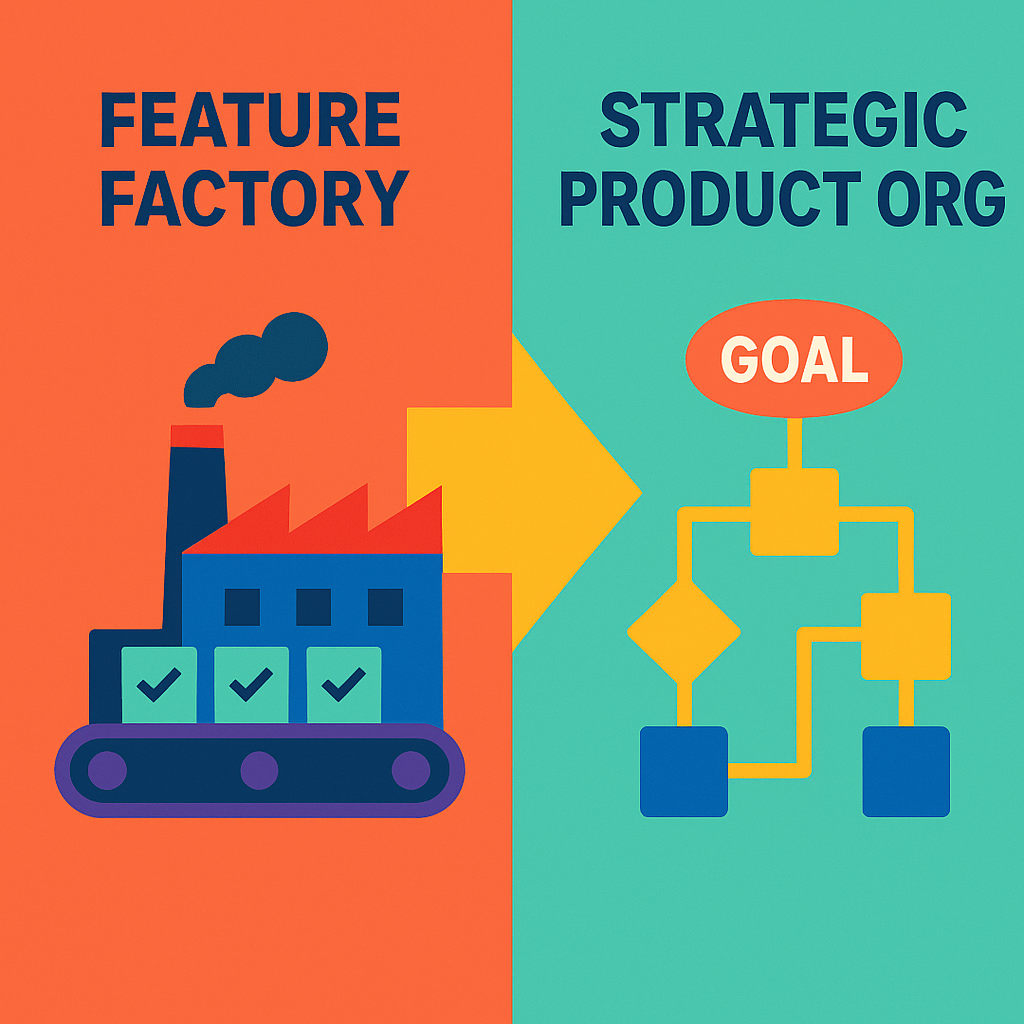
This is the Feature Factory in action. It’s not the absence of talent or ambition that traps teams here, it’s a systemic flaw in how product work is scoped, measured, and governed.
As a product leader, you’re not just responsible for what gets built. You’re responsible for why it gets built, and whether the business sees results. Transitioning your team into a strategic product organization is not a cosmetic shift, it requires reengineering how value is defined, prioritized, and delivered across every level of the product org.
Let’s unpack what that shift looks like in practice.
The Root of the Feature Factory Problem
Feature factories emerge when product teams optimize for volume of delivery rather than quality of outcomes. The problem isn’t Jira or agile ceremonies; it’s the absence of meaningful upstream alignment and downstream accountability.
Most commonly, the feature factory stems from these conditions:
- Product teams are organized to serve internal functions rather than customer needs.
- Roadmaps are shaped by stakeholder influence, not validated strategy.
- Success is reported in terms of what was launched, not what was learned or improved.
- PMs are incentivized to manage scope, not solve problems.
When your metrics dashboard is tracking velocity and ticket completion, but no one can tell you how this maps to revenue, retention, or cost efficiency, you’ve lost the plot.
But solving this isn’t as simple as switching to OKRs or adding another layer of reviews. This transformation requires a shift in operating principles, decision-making structures, and leadership behavior.
Reorientation of Strategy: Tie Product to Business Outcomes
This begins with clarity at the top. Product strategy must be designed not as an independent domain but as a response to the company’s most important commercial and operational objectives.
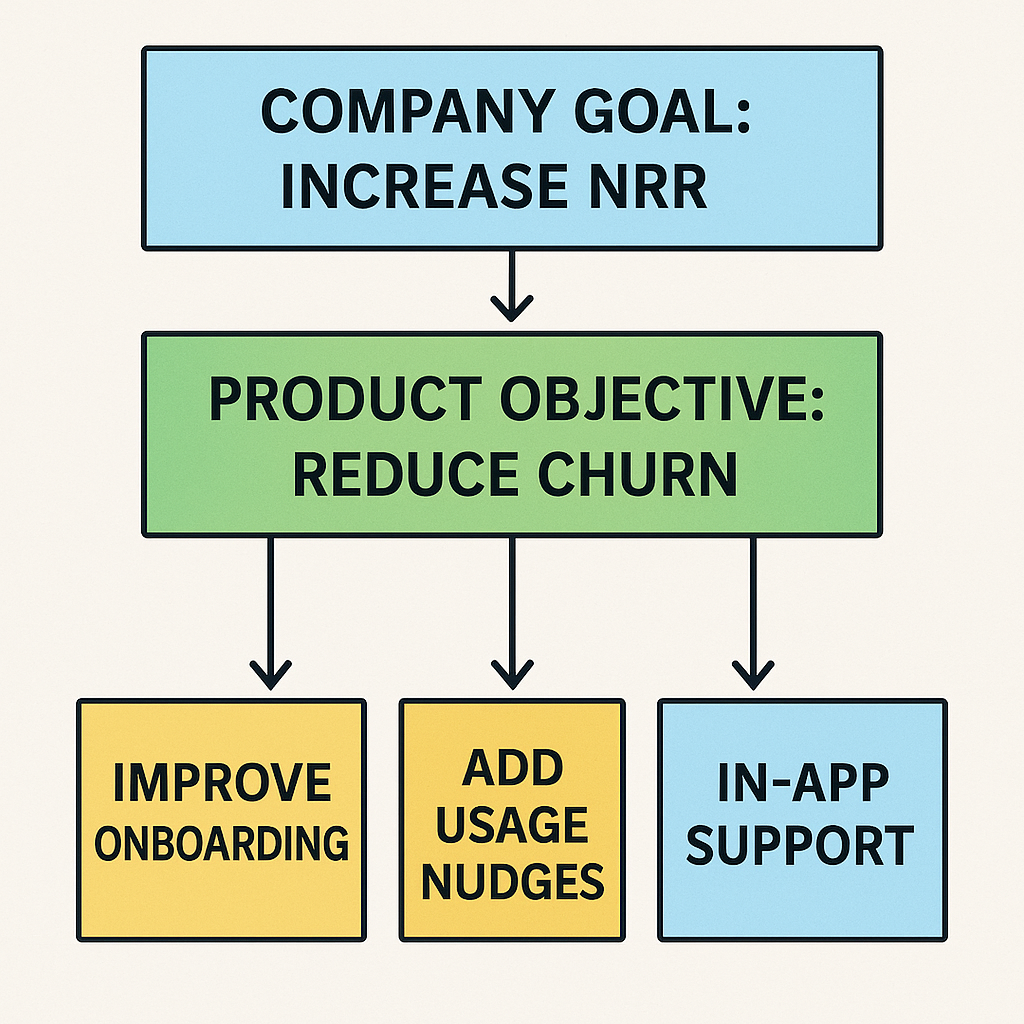
If the business is prioritizing retention, product needs to define how it will influence retention, whether that’s through reducing friction in onboarding, expanding engagement breadth, or reinforcing value recognition. If cost-to-serve is the concern, then self-service tooling and automation become strategic priorities, not feature requests.
In every case, the strategy must translate into a roadmap that’s traceable, where each initiative has a defined hypothesis, a success condition, and a business lever it intends to move.
That’s not a slide, it’s a discipline. And it changes the nature of product discussions with executive stakeholders. You’re no longer seeking approval to build; you’re presenting a theory of how to grow.
Reframing Prioritization: From Demand Management to Strategic Tradeoffs
At the heart of the feature factory is a flawed model of prioritization, one where product managers are positioned as facilitators of stakeholder requests, rather than stewards of strategic tradeoffs.
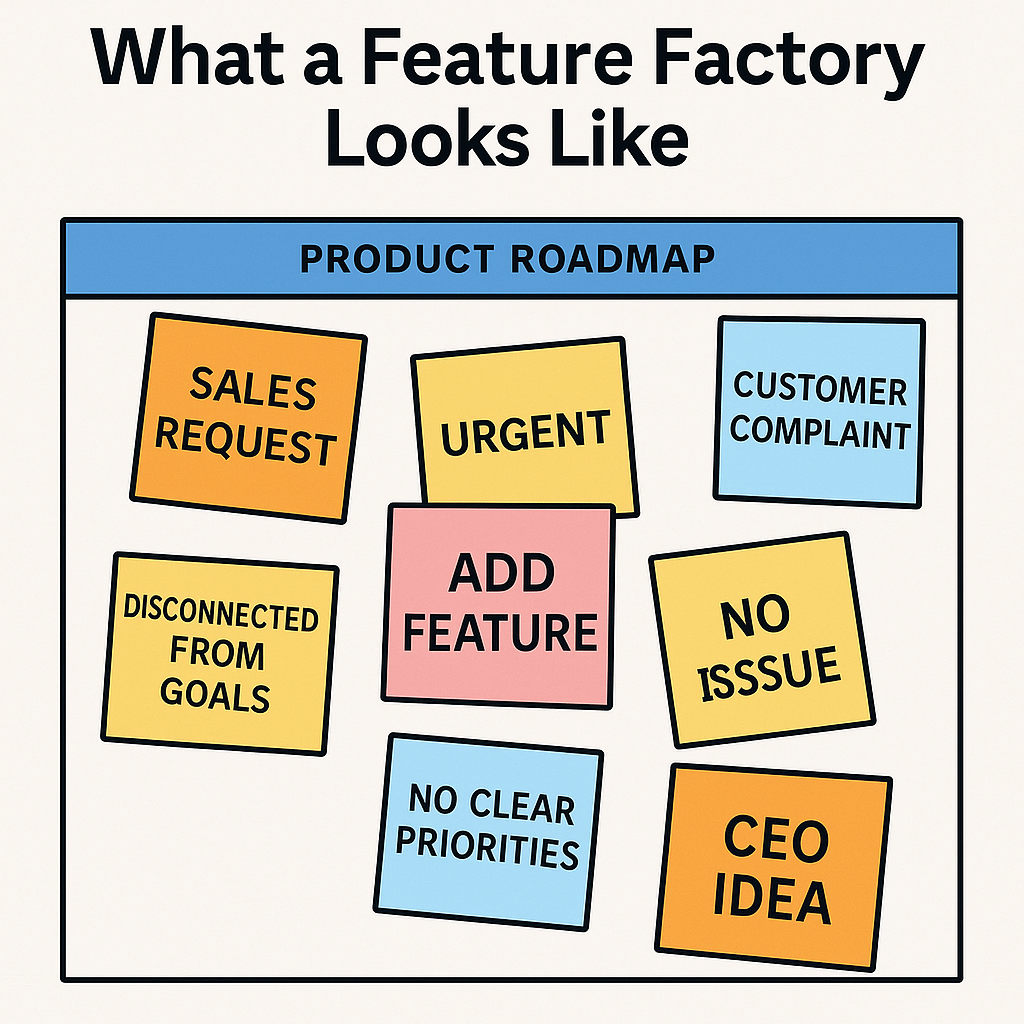
In this model, roadmaps resemble intake pipelines: sales wants a feature to close a deal, marketing wants another to drive leads, support pushes for one more to reduce ticket volume. The product team becomes a brokerage house, attempting to “balance” competing demands instead of making principled decisions. Every feature has a champion, but few have a case.
A strategic product organization abandons this transactional model in favor of a more rigorous, outcome-oriented approach. Prioritization is no longer about serving every function equally, it’s about serving the company’s strategy directly.
This means the PM is accountable not just for scope, but for focus, for deciding what not to build, and for standing behind that decision with clarity and courage.
Here’s what that shift looks like in practice:
- Instead of asking, “How quickly can we deliver this feature?”, ask, “What would break if we didn’t build it?”
- Instead of weighing features by number of votes or executive pressure, evaluate based on expected business impact, confidence level, and resource efficiency.
- Instead of running prioritization meetings with dozens of competing requests, product leaders bring a clear thesis of what the team will not pursue, and why.
This doesn’t eliminate friction. It invites it. But it invites the right kind of friction: the kind that leads to better choices, stronger alignment, and deeper trust.
Redistribution of Accountability: From PMs as Ticket Owners to Problem Owners
In many organizations, PMs inherit their role as backlog managers, not because of lack of skill, but because of how product work is defined from the top down.
They’re handed a list of features. They ensure those features are delivered on time. They participate in sprint rituals and update dashboards. But they’re rarely empowered, or expected, to own the outcome.
This is a misallocation of leverage.
If you want a product team that acts strategically, you must delegate not just tasks, but responsibility for business results. That means holding PMs accountable for measurable improvements in the areas their products touch, activation, retention, conversion, cost-to-serve, NPS, whatever the business most needs to move.
But accountability without authority is a trap. You can’t ask PMs to move KPIs without giving them the room to experiment, to pause bad bets, to challenge the roadmap, and to say no to initiatives that don’t map to a clear objective.
This is a cultural shift. It requires:
- Executive sponsorship that backs the PM’s autonomy
- A hiring model that favors strategic thinkers, not order-takers
- A leadership layer that reinforces learning, not just delivery
When PMs begin thinking like portfolio owners, managing customer problems with an investment mindset, you’ll see a meaningful change in product behavior. Not more activity. More results.
Organizational Implications: What Changes for You, Your Team, and Your Executive Peers
Shifting to a strategic product model isn’t a departmental initiative. It has consequences that ripple across the company. And as a senior product leader, your role isn’t just to transform your org, it’s to bring the company with you.
For your team, this shift demands a new bar for thinking. PMs must become fluent in financial levers, market context, operational tradeoffs, and user psychology. The transition will expose capability gaps. Invest in coaching, not just performance plans.
For your engineering peers, this model changes how roadmaps are built. No more feature bloat disguised as velocity. Engineers will need context earlier, and they’ll need to be part of shaping solutions, not just implementing requirements. This leads to better products, but also demands stronger collaboration.
For your go-to-market partners, the change is political. Sales can no longer “order” features to close deals. Marketing can’t rely on “what’s shipping” to generate buzz. The relationship must mature into shared outcomes, revenue, growth, efficiency, and GTM teams must become co-owners, not just consumers, of product work.
And for the executive team, this transformation means giving up some control. Strategy is no longer made in boardrooms and handed down, it’s co-developed, tested in the field, and adjusted based on what the product organization learns. That requires humility. But it also creates a far more adaptive and resilient business.
A Real-World Example: Rewiring for Strategic Delivery
In one of my prior roles, I joined a product organization that was shipping at an impressive pace, nearly 40 features per quarter. But despite the volume, our monthly active users had plateaued. Worse, net retention was declining.
We took a pause and rebuilt the roadmap from first principles. We started by identifying the three biggest business objectives for the upcoming fiscal year: improving retention, increasing upsell conversion, and reducing onboarding time.
We then traced every roadmap item back to one of those outcomes. Nearly 60% of our backlog didn’t qualify. It wasn’t that those features were bad, they just weren’t strategic.
We paused 19 initiatives. Instead, we doubled down on onboarding optimization, introduced product-led upgrade flows, and built usage-based nudges driven by behavioral triggers.
The results:
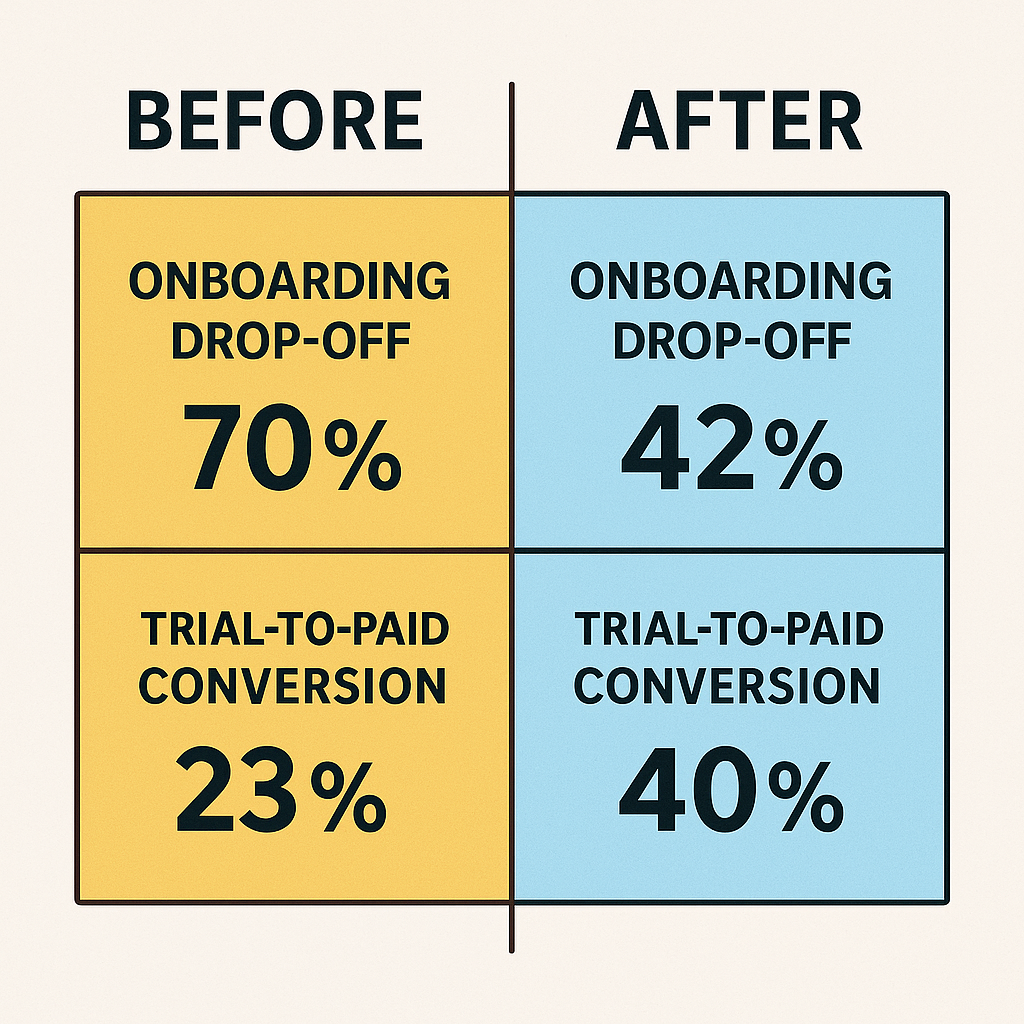
- Onboarding drop-off reduced by 28%
- Trial-to-paid conversion increased by 17%
- NPS moved up by 9 points over two quarters
And yet we shipped fewer features than the year before. That was the point.
Build Less. Change More.
Every product team will ship features. But only strategic product teams will ship change.
The journey from a feature factory to a strategic org is not cosmetic, it’s foundational. It redefines how product teams operate, how they engage with the business, and how they are measured. It requires courage, alignment, and relentless clarity of purpose.
The question isn’t whether you’re building fast. It’s whether you’re building what matters.
